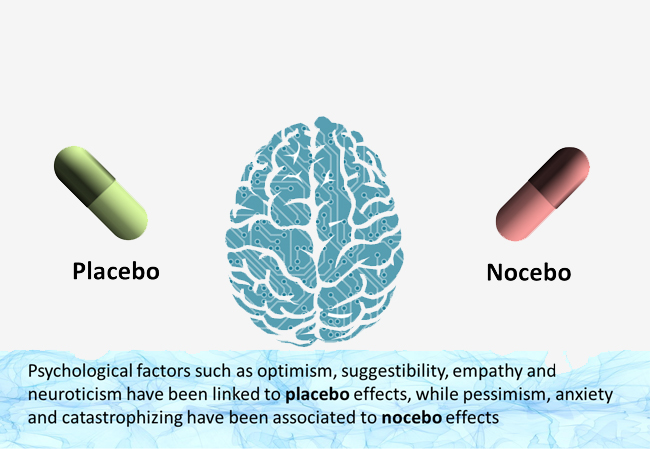
Placebo = I shall be pleasing. (L)
A placebo is an inactive treatment, sometimes called a 'sugar pill.' In fact, a placebo may be in a pill or tablet form, or it may be an injection (like saline) or a medical device or other procedures.
A placebo is anything that seems to be a "real" medical treatment but isn't. It could be a pill, a shot, or some other type of "fake or look-alike" treatment. What all placebos have in common is that they do not contain a active substance meant to affect health.
Sometimes a person can have a response to a placebo. The response can be positive or negative. For instance, the person's symptoms may improve. Or the person may have what appears to be side effects from the treatment. These responses are known as the "placebo effect."
Studies show that placebos can have an effect on conditions such as:
- Depression
- Pain
- Sleep disorders
- Irritable bowel syndrome
- Menopause
How does the placebo effect work?
Research on the placebo effect has focused on the relationship of mind and body. One of the most common theories is that the placebo effect is due to a person's expectations. If a person expects a poll to do something, then it's possible that the body's own chemistry can cause effects similar to what a medication might have caused.
For instance, in one study, people were given a placebo and told it was a stimulant. After taking the pill, their pulse rate sped up, their blood pressure increased, and their reaction speeds improved. When people were given the same pill and told it was to help them get to sleep, they experienced the opposite effects.
Experts also say that there is a relationship between how strongly a person expects to have results and whether or not results occur. The stronger the feeling,, the more likely it is that a person will experience positive effects. There may be a profound effect due to the interaction between a patient and healthcare provider.
The same appears to be true for negative effects. If people expect to have side effects such as headaches, nausea, or drowsiness, there is a greater chance of those reactions happening.
One problem with the placebo effect is that it can be difficult to distinguish from the actual effects of a real drug during a study. finding ways to distinguish between the placebo effect and the effect of treatment may help improve the treatment and lower the cost of drug testing. And more study may also lead to ways to use the power of the placebo effect in treating disease.
Nocebo Effect / Nocebo response
Nocebo = I shall harm (L)
placebo effect has a dark side, too -- a sort of negative placebo effect called the nocebo effect. It's what happens when you're given a sugar pill, are told it's a drug that has terrible side effects, then start to exhibit those symptoms. The nocebo effect can also occur when a doctor tells you surgery or procedure could have negative results: Just knowing the risks could negatively impact your recovery.. all because of the power of suggestion.
The nocebo effect, happens when a person's negative expectations of treatment lead to negative side effects.